The Anatomy of a Perfect Custom Running Hat
A standard baseball cap weighs about 3.5 ounces (100 grams). To a casual wearer, that is nothing. To a marathon runner at mile 18, it feels like a brick.
If your brand is trying to break into the activewear or running market in 2026, you cannot simply slap your logo on a basic cotton dad hat and call it a "Running Cap." Runners demand technical performance. They need gear that manages sweat, dumps heat, and feels virtually weightless.
As a performance headwear manufacturer, we have engineered hats for ultra-marathoners, track clubs, and premium athleisure brands. Here is our exact blueprint for building a retail-ready, high-performance running hat.
1. The Fabric: Ultra-Light & Hydrophobic
Cotton absorbs sweat and holds onto it, making the hat heavy and soggy. For a true running hat, synthetic is the only option.
The Standard: 100% Polyester Mesh. It works, but it can feel cheap and scratchy.
The 2026 Upgrade: 4-Way Stretch Nylon or Ripstop. It is incredibly lightweight, offers UV protection, and features a DWR (Durable Water Repellent) coating so light rain beads right off.
Pro Tip: To maximize airflow without sacrificing structure, ask for Laser-Perforated side panels instead of traditional mesh. It looks much more premium and reduces the hat's total weight to under 1.5 ounces.
2. The Brim: The "Crushable" EVA Visor
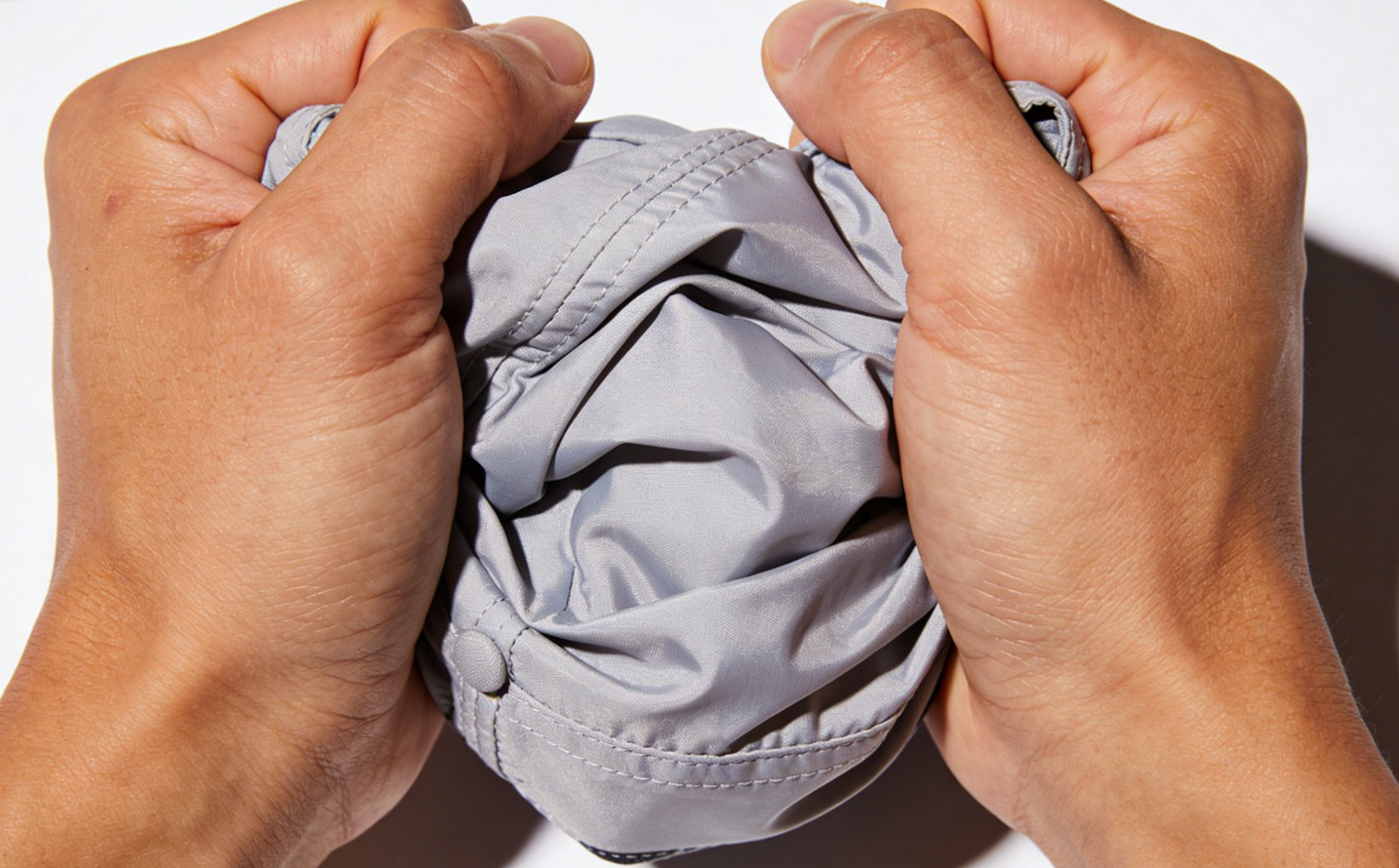
This is the #1 secret to a premium running hat. Traditional baseball caps use a stiff plastic board inside the brim. If a runner takes the hat off and stuffs it into their hydration vest or pocket, the plastic brim will bend and permanently ruin the hat's shape.
The Solution: We use a Crushable EVA Foam Insert.
The Benefit: It is soft, flexible, and completely machine washable. The runner can crumple the hat into a ball, and when they pull it out, the brim snaps perfectly back into its original shape. It also eliminates pressure points on the forehead.

3. The Sweatband: Cooling & Anti-Bacterial
The interior sweatband is the only part of the hat that maintains constant contact with the runner's skin.
Avoid: Standard cotton-blend sweatbands. They trap bacteria and cause breakouts.
Specify: A Moisture-Wicking Microfiber Sweatband with an anti-microbial treatment. It pulls sweat away from the forehead and pushes it to the outer nylon layer where it can evaporate quickly.
4. The Closure: Snag-Free & Aerodynamic
When a runner is moving, any loose or flapping straps are a major distraction. Furthermore, standard Velcro can snag on long hair or expensive running jackets.
Best Option 1: Micro-Velcro (Hook and Loop). This is a specialized, ultra-smooth velcro that does not catch on hair.
Best Option 2: Nylon Webbing with a low-profile plastic clip. It is lightweight, secure, and will not rust from sweat like a metal buckle would.
Best Option 3: Bungee Cord with a Toggle. A huge trend in trail-running gear, offering a flexible, bounce-free fit.
5. Visibility: Reflective Elements (3M)
Runners often train early in the morning or late at night. Adding safety features instantly increases the perceived value of your hat.
Instead of standard thread, use Reflective Thread for your logo.
Add a Reflective Binding along the edge of the brim.
Use a Reflective Woven Label on the back closure.
A great running hat becomes a runner's best friend. They will wear it in every race, take it on every vacation, and feature it in all their finish-line photos.
By upgrading your tech specs—choosing EVA brims, laser perforations, and snag-free closures—you elevate your brand from "selling merch" to "providing high-performance athletic gear."
Want to feel the difference between a standard plastic brim and our crushable EVA visor? Contact our production team today to get a physical sample kit sent to your office.