Custom Corduroy Hat Manufacturer: Vintage Dad Caps OEM Guide
The Brand Guide to Custom Corduroy Hat Manufacturing: Wale Counts, Vintage Washes, and Embroidery Techniques
In contemporary streetwear and heritage workwear, few materials evoke as much tactile luxury and vintage authenticity as corduroy. Defined by its parallel velvety ridges, custom corduroy headwear has become an essential staple across high-margin autumn/winter collections and transitional lifestyle drops.
However, producing a retail-grade corduroy cap requires technical precision far beyond standard cotton twill. Managing distinctive rib textures, needle pile crushing, embroidery sinkage, and dimensional stability during washing requires specialized cut-and-sew expertise.
At ESSCAPS, backed by over 28 years of specialized headwear manufacturing heritage, our technical production lines provide complete OEM/ODM manufacturing solutions for bespoke corduroy dad hats, 5-panel camper caps, and structured snapbacks.
1. Demystifying Wale Counts: Choosing the Right Texture
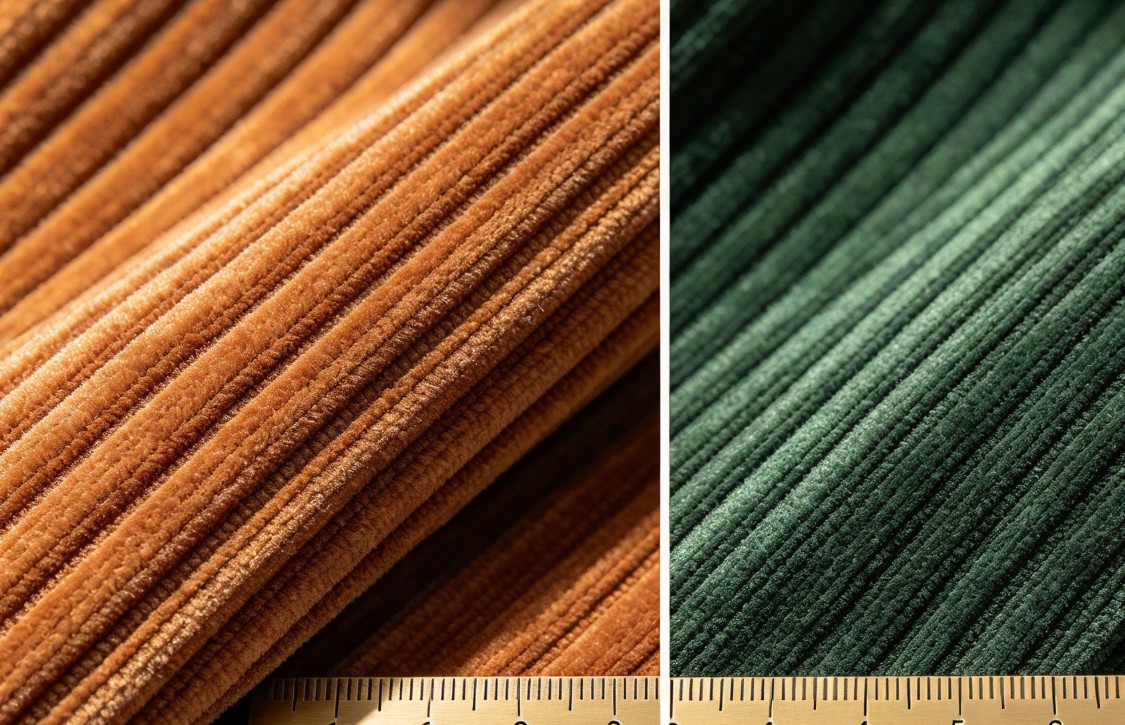
The character of a corduroy cap is primarily dictated by its wale count—the number of ridges (cords) per inch of fabric:
Wide Wale (6 to 8 Wale): Features bold, thick ridges with deep recessed grooves. This delivers a heavy-duty, retro 70s Americana workwear aesthetic, ideal for unstructured dad caps and relaxed camper silhouettes.
Standard Mid Wale (11 to 14 Wale): The balanced commercial standard. Versatile across both structured snapbacks and soft crowns, providing visible velvety texture without overwhelming fine branding details.
Pinwale / Babycord (16 to 21 Wale): Ultra-fine, dense ridges delivering a velvety, refined hand feel. Favored by contemporary luxury and minimalist brands requiring a subtle textured finish.
GRS-Certified Recycled & Organic Cotton Blends: Sustainable corduroy options crafted from certified organic cotton yarns or recycled polyester blends that retain natural pile softness without environmental compromise.
2. Advanced Decoration Techniques on Textured Corduroy
Embroidering across raised vertical ribs presents mechanical challenges; poor digitizing causes stitches to sink unevenly into fabric troughs. We eliminate these defects through specialized techniques:
Engineered Water-Soluble Topping (Solvy): A lightweight film placed over the corduroy ribs before stitching begins. It keeps embroidery threads elevated above the velvety pile, preventing letters from looking jagged or sunken.
Dense Underlay Stitching: Laying down tight tatami lattice underlays that compress the ribs uniformly before top-level satin stitches are applied.
Merrowed Woven & Felt Appliqué Badges: For heritage workwear lines, heat-pressed felt or twill patches edged with heavy overlock stitching bridge the corduroy grooves smoothly.
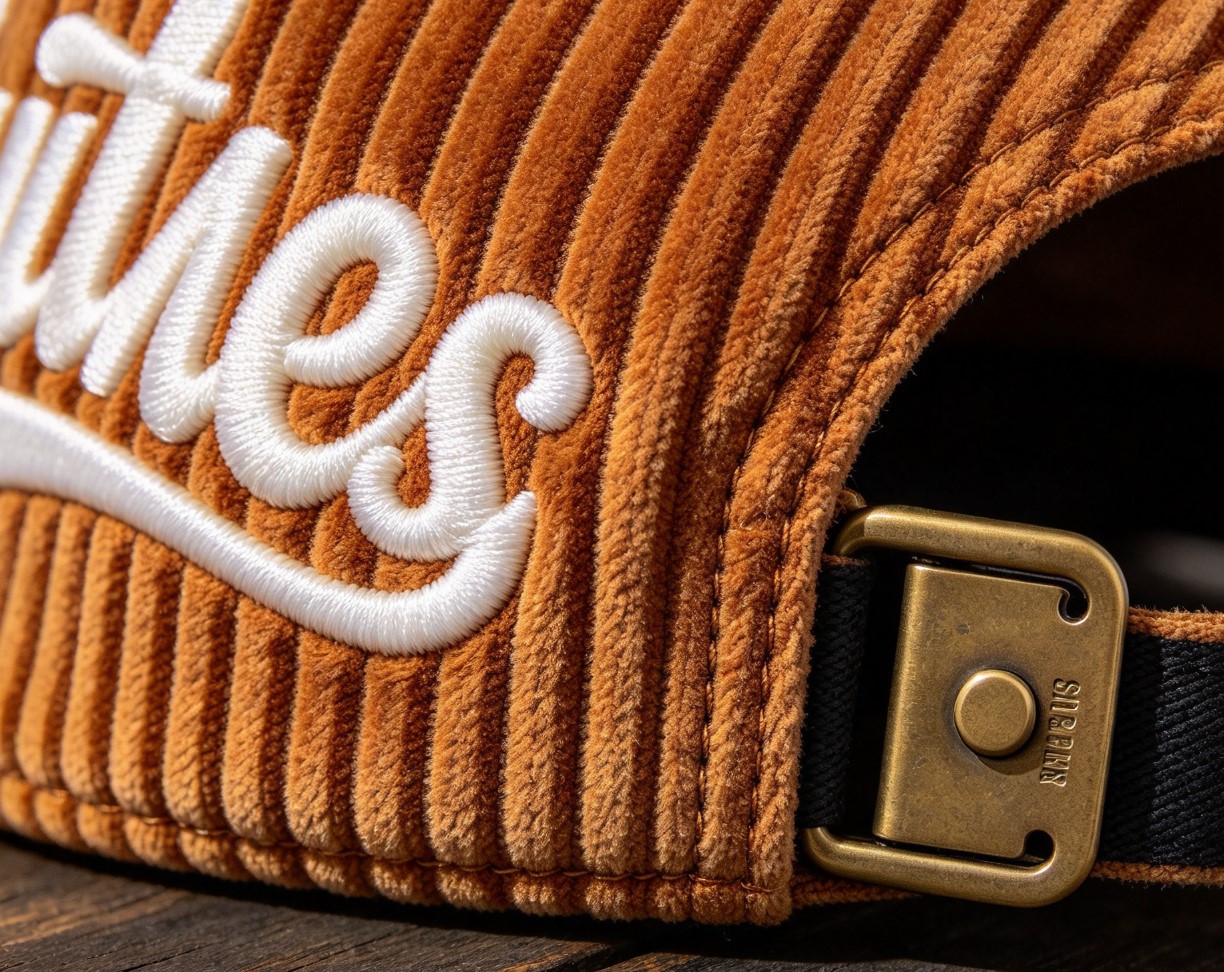
Direct High-Density Flat Embroidery vs. 3D Puff: While flat embroidery is optimized using dense underlays, low-profile 3D puff embroidery can be applied to wide-wale caps using high-density foam cores that span the fabric ribs.
3. Silhouettes, Washing & Heritage Hardware
Unstructured 6-Panel Dad Cap Profile: The natural match for wide-wale corduroy. Without stiff front buckram, the plush crown drapes naturally to the wearer's skull contour.
Vintage Garment Enzyme Washing: Controlled enzyme wash cycles soften the cotton pile and introduce subtle distress along seam edges (roping effect), giving caps an authentic vintage look.
Antique Brass Metal Clamps & Buckles: Tonal antique bronze, matte black, or brushed silver tri-glide sliders paired with matching corduroy self-fabric or vegetable-tanned leather tuck-in straps.
Sweatband & Interior Taping: Soft 100% cotton chino twill internal sweatbands that prevent direct friction against the forehead, preventing sweat salt buildup and maintaining all-day wearability.
4. Factory Precision and Scalable Supply at ESSCAPS
Operating across our 24,000 m² certified manufacturing facility, ESSCAPS maintains full traceability under BSCI, GRS, and GOTS standards:
Pile Direction & Pattern Alignment: Every cap panel is cut along the identical pile orientation (nap direction) to prevent light reflection discrepancies between adjacent panels.
Abrasion & Pile Loss Testing: Rotary abrasion testing ensures velvety ribs do not bald or shed under repeated friction.
Flexible Low MOQ Starts: Launch signature corduroy collections starting at 50 pieces per style/colorway, supported by rapid sample development and dependable worldwide door-to-door delivery.