Cut-and-Sew vs. Blank Hats: Which Manufacturing Route is Right for Your Brand?
Every successful clothing brand eventually faces the same dilemma: How do we produce our headwear?
When you first start out, it is tempting to buy a batch of cheap, pre-made blank hats (like Richardson 112s or Yupoong Snapbacks) from a local print shop and slap your logo on the front. This is fine if you are making promotional merch for a local plumbing company.
But if you are building a premium streetwear, golf, or outdoor brand in 2026, your customers can instantly feel the difference between a $15 generic blank and a $50 custom-engineered piece.
To help you scale your brand profitably, here is the ultimate breakdown of the three main manufacturing routes: White Label, Private Label, and fully Custom Cut-and-Sew.
1. White Label (The "Promo Blank" Route)
White labeling is the most basic form of manufacturing. A massive factory produces millions of identical, blank hats. You buy them wholesale and take them to a local embroiderer.
The Pros: Incredibly fast turnaround times (often just a few days). Very low minimum order quantities (MOQs)—you can easily make just 10 or 20 hats.
The Cons: Zero customization. You cannot change the fit, the fabric, or the crown height. You are stuck with the manufacturer's tear-away tag.
The Verdict: Great for family reunions or corporate giveaways, but terrible for high-end fashion brands. It carries zero brand equity.
2. Private Label (The Middle Ground)
Private label is one step up. You are still using pre-made blank hats, but the manufacturer allows you to remove their generic tag and sew in your own brand’s woven label.
The Pros: It gives the illusion that you manufactured the hat yourself. It’s relatively quick and cost-effective.
The Cons: You still cannot dictate the silhouette. If you want a specific DWR water-repellent nylon or a vintage braided rope across the visor, you are out of luck. Furthermore, you cannot do large-scale "all-over" prints or under-brim embroidery, because the hat is already fully assembled.
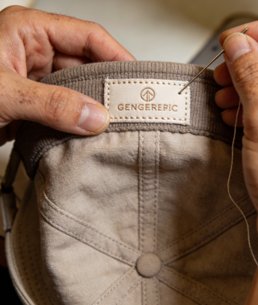
3. Fully Custom Cut-and-Sew (The Premium Standard)
This is where the magic happens. "Cut-and-Sew" means the hat does not exist until you order it. We literally roll out raw fabric, cut the individual panels, embroider them before assembly, and sew the hat together from scratch based on your exact Tech Pack.
The Pros: Unlimited creative freedom. * Want an A-Frame high crown with a crushed EVA visor? Done.
Need custom printed inside taping that says your brand motto? Done.
Want 3D liquid silicone pressed onto a sustainable recycled polyester (rPET)? Done.
The Cons: Higher MOQs (usually starting at 100-300 pieces per colorway) and longer production timelines (4 to 8 weeks).
The Verdict: If you want to charge $40, $50, or even $80+ for a hat, Cut-and-Sew is your only option. This is how brands like Kith, Aimé Leon Dore, and Malbon Golf create hype-worthy silhouettes that fit perfectly.
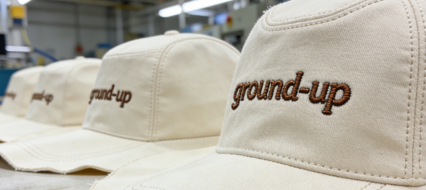
The Math Behind Cut-and-Sew
Many founders stick to blanks because they assume Cut-and-Sew is too expensive. Let's look at the actual numbers:
Buying a premium blank and paying a local shop to embroider it often costs $3 - $5 per hat. You can retail it for maybe $30. (Profit: $25).
Manufacturing a fully custom Cut-and-Sew hat overseas (with custom tags, taping, and premium fabrics) might cost you $7 - $10 per hat at volume. Because of the bespoke fit and premium details, you can retail it for $50. (Profit: $40).
By taking control of your supply chain, you lower your unit cost while drastically increasing your retail value.
Stop Using Blanks. Build Your Own Silhouette.Are you ready to graduate to fully custom manufacturing? Send us your logo and design ideas. At ESSCAPS, we specialize in premium Cut-and-Sew headwear for brands that demand perfection.