Pantone Color Matching in Hat Manufacturing: Lab Dip Guide
The Complete Guide to Pantone Color Matching in Custom Hat Manufacturing
For apparel founders, streetwear designers, and corporate procurement teams, few production issues are more frustrating than opening a bulk shipment only to discover that the fabric color deviates noticeably from the approved brand guide. In headwear manufacturing, accurate Pantone color matching is the cornerstone of retail credibility.
Achieving identical tonal consistency across cotton twill crowns, polyester trucker mesh, plastic snap closures, and embroidery threads requires precise chemical calibration and standardized optical inspection.
At ESSCAPS, backed by over 28 years of headwear manufacturing heritage, our color laboratory and dyeing facilities utilize scientific OEM/ODM color matching protocols to ensure your production run aligns perfectly with your brand identity.
1. Choosing the Right Pantone System: TCX vs. PMS
One of the most frequent design bottlenecks in headwear tech packs stems from selecting the wrong color reference library:
Pantone Fashion, Home + Interiors (TCX / TPG): Engineered specifically for textiles. The TCX (Cotton Edition) code indicates how dyes interact with natural and synthetic fibers. Providing a TCX reference guarantees the highest dyeing accuracy for woven crowns, canvas, and corduroy fabrics.
Pantone Matching System (PMS / Coated / Uncoated): Primarily intended for print and paper packaging. While PMS codes work effectively for screen-printed underbrims, woven labels, and hard enamel pins, translating paper inks directly to reactive textile dyes introduces optical reflection variances.
Cross-Material Matching: If you only have a PMS graphic code, our color technicians calibrate spectrophotometer spectral readings to find the exact textile dye formulation equivalent.
2. The Lab Dip Approval Workflow: From Swatch to Bulk
When designing custom-dyed hats rather than choosing stock fabric rolls, the Lab Dip process ensures zero surprises in mass production:
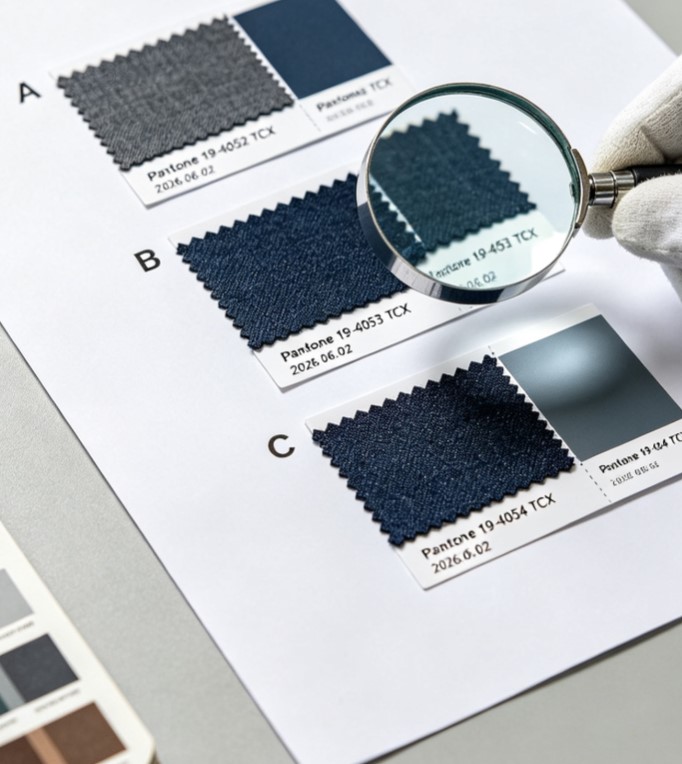
Digital Spectrophotometer Reading: The target Pantone shade is analyzed with digital optical sensors to establish exact spectral reflection curves.
Formulation & A/B/C Dip Creation: Our dyeing facility prepares three subtle formulation variants (Options A, B, and C), adjusting dye saturation and hue undertones slightly around the target swatch.
Substrate Consistency: Lab dips are dyed directly onto the exact fabric chosen for your cap—whether 100% heavy cotton chino twill, recycled rPET, or ripstop nylon—accounting for fiber absorption differences.
Physical Approval & Sign-Off: Swatches are trimmed, cataloged, and shipped directly to the brand for tactile review under natural sunlight and commercial retail lighting.
3. Controlling Metamerism & Standardized Lightbox Inspection
Colors shift appearance depending on the light source—a phenomenon known as metamerism. A baseball cap might appear flawless under afternoon daylight but lean yellowish under warm retail halogen or fluorescent office lights.
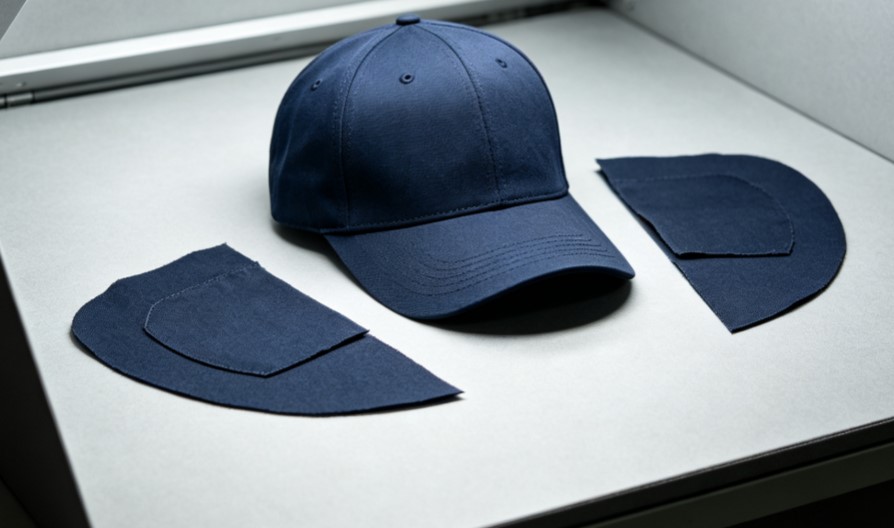
To eliminate metamerism, our quality control technicians inspect every production run inside standardized D65 Color Assessment Lightboxes, cycling through multiple controlled environments:
D65: Standard artificial daylight (6500K) for outdoor color validation.
TL84 / CWF: Commercial retail store lighting standards used across North American and European malls.
Illuminant A: Warm incandescent light representing domestic settings.
4. Multi-Component Color Coordination: Threads, Mesh & Closures
A premium cap is rarely mono-material. Seamless execution requires matching multiple distinct materials to the same Pantone reference:
Embroidery Thread Calibration: Direct conversion to high-tenacity polyester thread catalogs (such as Madeira and Coats), ensuring 3D puff embroidery and flat stitching harmonize with the shell fabric.
Trucker Mesh & Snapbacks: Custom masterbatch plastic molding for snapback closures and customized poly-mesh dyeing to prevent mismatched panels.
Anti-Fading & Colorfastness Standards: All reactive dyes meet ISO 105 and AATCC standards for wash, light exposure, and perspiration fastness (Grade 4.0+), preventing forehead sweat from creating discolored salt stains.