Tactile Heritage: The Technical Sourcing Blueprint for Custom Corduroy Caps
As autumn and winter apparel collections transition toward richer, multi-textured narratives, standard flat cotton twill gives way to fabrics with physical warmth and organic depth. In the contemporary luxury streetwear, heritage country club, and high-end D2C lifestyle markets, custom corduroy caps have firmly asserted themselves as an irreplaceable seasonal powerhouse.
For Sourcing Directors, Product Managers, and Brand Directors, adding heavy-textured ribbed headwear to your fall/winter drops is an exceptional strategy to command high retail margins. However, manufacturing corduroy headwear that looks pristine rather than unkempt requires meticulous textile discipline. Lower-tier suppliers frequently deliver bulk runs marred by crooked rib alignment along seam boundaries, flattened velvet pile, or embroidered logos that sink awkwardly into the fabric's grooves.
Here is the definitive sourcing guide to engineering certified, retail-ready custom corduroy caps that maintain their plush, structural elegance.
1. Wale Density Calibration: Matching Texture to Brand Aesthetic
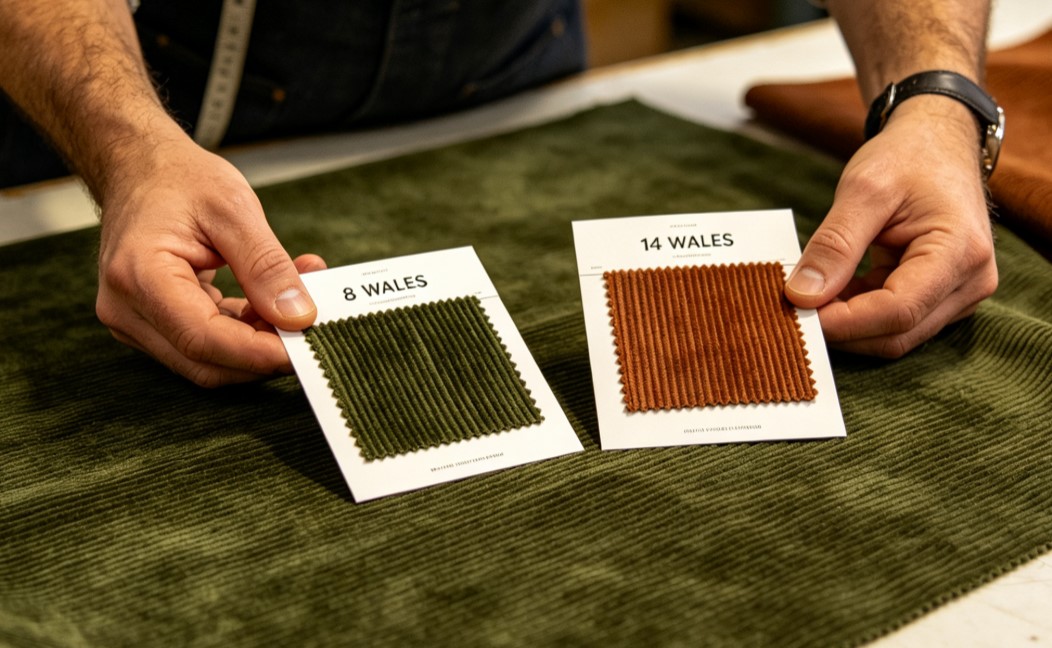
The foundational identity of corduroy lies in its "wales"—the raised parallel velvet ridges per inch. Selecting the correct wale density dictates the entire vibe of the finished cap:
8 to 11 Wales (Heavyweight/Chunky Texture): Featuring wide, thick ridges with an unmistakable vintage 1970s aesthetic. Ideal for heritage streetwear, outdoor lifestyle labels, and rugged workwear capsules that demand strong visual presence at a distance.
14 to 16 Wales (Pinwale/Fine Texture): Utilizing fine, densely packed micro-ridges that deliver a sleek, velvety touch. Perfect for contemporary minimalist brands, high-end golf capsules, and subtle "Quiet Luxury" collections requiring understated sophistication.
2. Precision Pattern Cutting: The Art of 1:1 Wale Alignment
Unlike uniform woven fabrics, corduroy possesses a distinct directional nap (pile direction) and strict parallel geometric lines.
The Directional Nap Protocol: All panels—front crown, side walls, and visor—must be cut in the exact same pile direction. If a vendor accidentally cuts one panel upside down, light reflection will make that panel look like a completely different shade of fabric, ruining the bulk run.
Symmetrical Seam Alignment: Our computerized cutting arrays align the fabric's vertical wales directly along panel construction boundaries. At the center front seam, left and right ridges meet in a flawless 1:1 geometric match, eliminating awkward zigzag breaks.
3. Anti-Sink Embroidery Engineering: Preserving Logo Sharpness
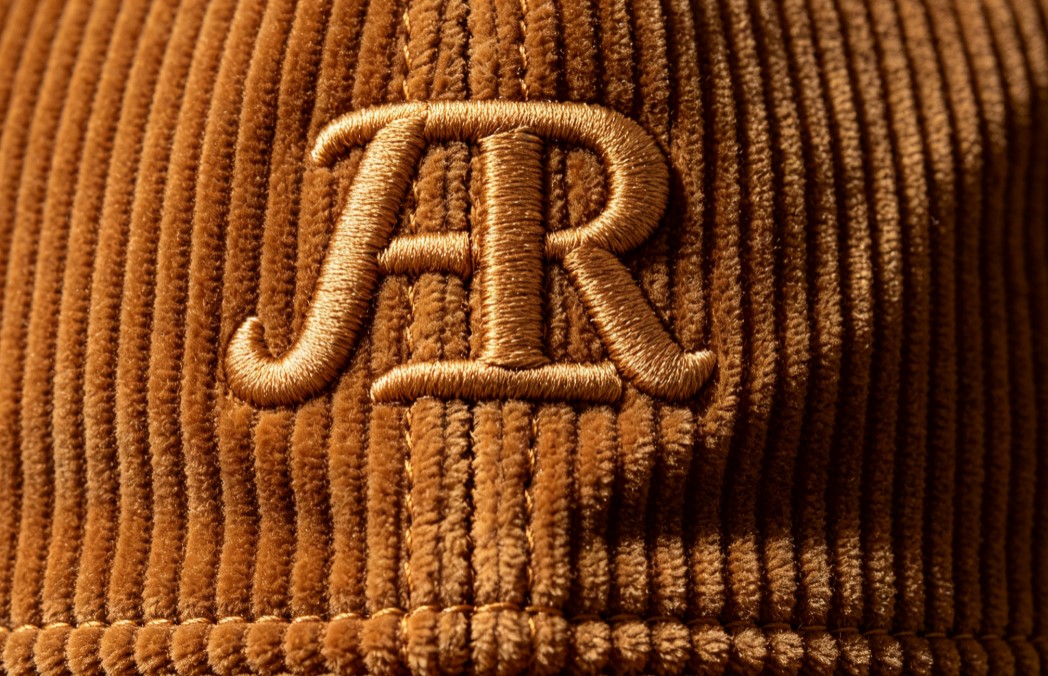
Placing a custom flat or 3D embroidered logo directly onto a ribbed, uneven surface like corduroy is a common failure point; thread stitches tend to fall into the valleys between wales, creating jagged, distorted logo borders.
Dense Underlay Stitching: We program specialized high-density tatami underlay grids beneath the primary logo. This creates an invisible, firm foundation layer that bridges the fabric grooves, allowing the top embroidery to sit smoothly at a uniform height.
Micro-Puff Elevation: Utilizing low-profile 2mm EVA foam backing for raised logos, elevating the branding cleanly above the plush velvet pile without pulling or distorting the surrounding fabric.
4. The ESSCAPS Quality Grid: Non-Negotiable AQL 2.5 Compliance
At ESSCAPS, we don't treat textured lifestyle caps as simple promotional items. We treat the physical tension, pile direction, and seam geometry of a custom corduroy cap with absolute industrial reverence.
Operating under world-class AQL 2.5 quality control standards, our direct-to-factory production pipeline systematically evaluates fabric pile resilience, color fastness against rub-friction, seam strength under tension, and post-assembly blocking shape memory in-house. This comprehensive direct oversight ensures that whether your seasonal release is a 1,000-unit boutique capsule or a 50,000-unit global retail launch, every single asset lands with pristine structural consistency.
Conclusion: Secure Autumn/Winter Dominance with Premium Texture
In the contemporary apparel landscape, consumers judge a seasonal accessory's value by how rich it looks and feels in hand. By selecting calibrated wale densities, precision directional pattern cutting, and anti-sink embroidery foundations for your upcoming collections, you elevate your brand far above mass-market options.
Ready to co-engineer the ultimate custom corduroy cap collection for your brand’s next seasonal drop?
[Request our Heritage Fabric & Corduroy Swatch Catalog] or [Consult with our Lead Technical Sourcing Engineers today] to arrange a customized physical sample kit built to your exact specifications.