Mitigating the Market: Why Agile Sourcing and Flexible MOQs Are the Ultimate Growth Hacks for Modern
The traditional fashion calendar is officially dead. The days of forecasting seasonal inventory twelve months in advance and placing massive, rigid bulk orders have been replaced by a dynamic, hyper-fast market driven by viral social media trends and real-time e-commerce data.
For Operations Directors, Supply Chain Managers, and Fashion Founders, the biggest threat to brand survival isn't a lack of creative ideas—it is the financial paralysis of deadstock. Carrying thousands of unsold units from an over-budget production run drains capital and stifles agility.
To win in this modern retail environment, elite brands are re-architecting their operations around a new manufacturing blueprint: agile apparel sourcing and low MOQ scalability.
1. The Capsule Drop Model: Testing the Waters Without the Risk
In the digital-first economy, the most profitable way to launch product lines is through the "Capsule Drop" or "Micro-Release" strategy.
The Strategy: Instead of launching 5,000 units of a single unverified design, savvy brands launch five distinct designs with 100 to 200 units each.
The Lean Supply Chain: This flexible approach allows you to gather real-world purchasing data, analyze consumer sentiment, and identify the viral "hero product" before tying up major capital in mass volume.
2. Bridging the Gap: The Micro-to-Macro Scaling Engine
The ultimate trap of standard "low MOQ vendors" or print-on-demand brokers is that they lack industrial muscle. When a brand's micro-drop goes viral and orders surge overnight, these small shops collapse under the scale, leading to delayed shipping and ruined customer experiences.
Direct-to-Factory Scalability: True agile sourcing means your manufacturing partner treats low-volume testing with the exact same technical precision as high-volume production.
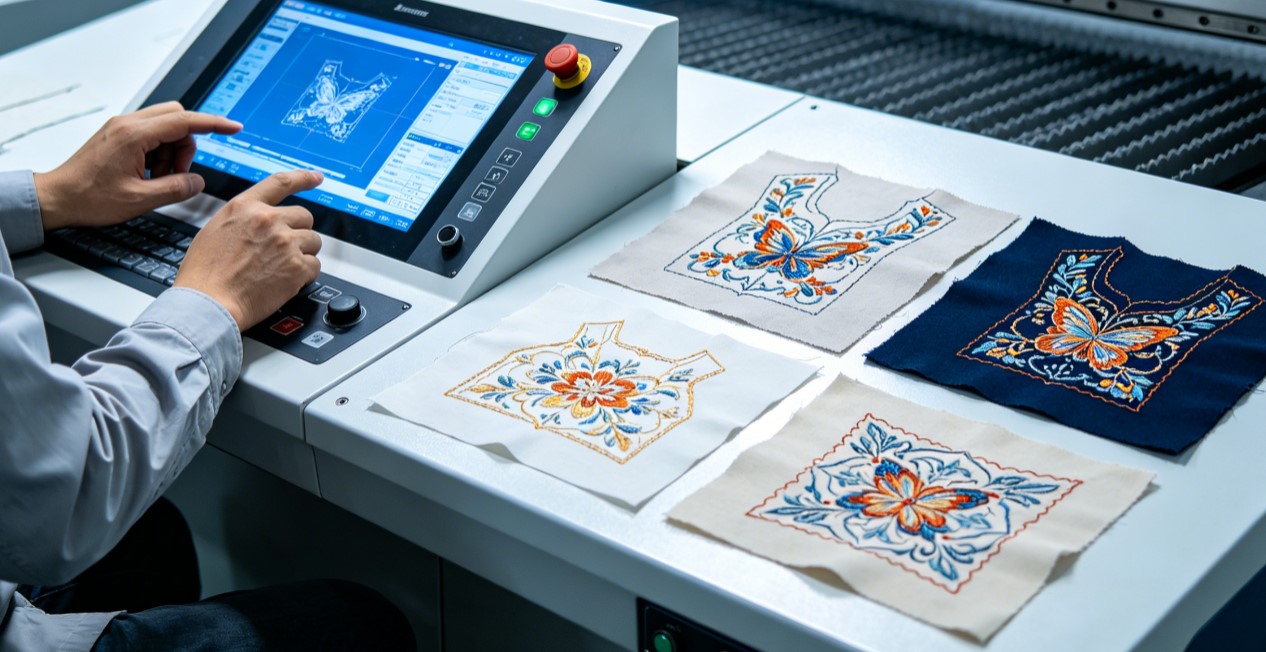
The Pipeline: The specific 3D embroidery parameters, digital pattern matrices, and custom component molds created for your initial 100-unit drop are permanently coded into our automated systems. When it's time to scale to 10,000 units, the transition is seamless, instant, and frictionless.
3. Supply Chain Compression: Reducing Lead Times to Days
Agility is entirely dependent on speed. A low MOQ is useless if the factory takes months to deliver the goods.
Integrated Component Matrix: By managing raw technical textiles, custom metal hardware, and branding decoration arrays under one primary factory roof, intermediary friction is completely removed.
Rapid Response Execution: Compressing the development pipeline from sketch to approved retail-ready bulk delivery down to competitive industry minimums, allowing your brand to restock best-sellers while the market demand is still at its peak.
4. The ESSCAPS Quality Shield: Non-Negotiable AQL 2.5
At ESSCAPS, we believe that a lower production volume should never mean a lower quality standard. Whether we are producing a highly curated, limited-edition run for an energy drop or scaling a massive rollout for global distribution, our guardrails remain ironclad.
Operating under world-class AQL 2.5 quality control frameworks, every single batch undergoes rigorous tensile, stitch-density, and colorfastness evaluations. We provide modern fashion enterprises with the perfect operational balance: the extreme agility of a micro-factory combined with the precision and scaling power of a tier-one industrial powerhouse.

Conclusion: Future-Proof Your Inventory Strategy
Innovation is not just about aesthetic styling—it is about operational resilience. By partnering with a factory designed for agile scalability and flexible manufacturing parameters, you liberate your brand from inventory anxiety and build an adaptive, high-margin asset.
Ready to launch your next low-risk, high-impact capsule drop?
[Request our Agile Sourcing Blueprint] or [Consult with our Technical Sourcing Engineers today] to arrange a customized sample kit and explore our flexible production pipelines.